
Flat Roof & Roofline Insulation
Flat roofs and low-slope rooflines present insulation challenges that standard attic methods cannot solve — and leaving them unaddressed means paying for it in energy costs and roof lifespan every single year.
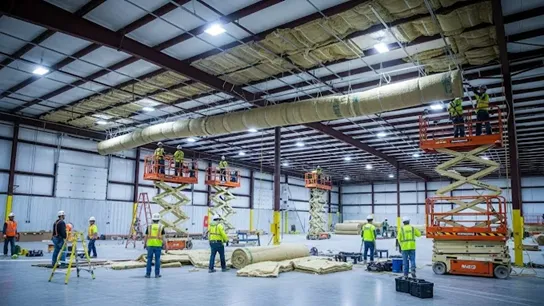
Flat roofs and low-slope rooflines are common across Chicago-area commercial buildings, coach houses, additions, and homes with non-traditional roof configurations. Unlike a standard pitched attic where blown-in or batt insulation can be installed on the floor, flat roof assemblies have no accessible attic space — the insulation has to be integrated into the roof assembly itself or applied to the underside of the roof deck from below. Without it, the roof structure is exposed to the full force of Chicago winters on one side and interior heat on the other, with nothing between them to slow the energy transfer in either direction. The result is higher heating and cooling costs, interior temperature fluctuations, and accelerated wear on the roof membrane from thermal cycling.
Roofline insulation for sloped ceilings and knee walls presents a related but distinct set of challenges. In homes with cathedral ceilings, finished attic spaces, or rooms built under a sloped roofline, the insulation has to fit within the rafter cavity without blocking the ventilation channel that protects the roof deck from moisture accumulation. Getting this right requires understanding the rafter depth, the ventilation requirements, and the insulation material that will achieve the target R-value within the available space. Knee walls — the short vertical walls at the edge of a finished attic space — are another common insulation gap in Chicago-area homes that contribute significantly to heat loss in upper-level rooms.
Homes and commercial buildings across Des Plaines, Evanston, Chicago, Oak Brook, and the surrounding suburbs with flat roofs or complex roofline configurations benefit significantly from insulation that is installed correctly for those specific conditions. A well-insulated flat roof assembly protects the membrane from the inside out, reduces the thermal load on the building, and produces consistent interior temperature performance year-round. Contact OTS Chicago Insulation for a free assessment and find out what your flat roof or roofline configuration actually requires to perform correctly.
What We Offer:
Flat Roof Assembly Insulation — Insulation applied to the underside of a flat roof deck from below creates a thermal barrier between the exterior and the conditioned space beneath it. We assess the roof assembly, select the appropriate material for the configuration, and install it correctly so the roof structure is protected and interior temperatures are stabilized.
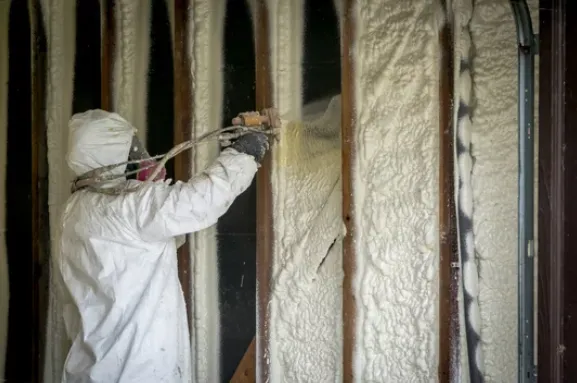
Closed Cell Spray Foam for Flat Roofs — Closed cell spray foam applied directly to the underside of a flat roof deck is one of the most effective solutions for flat roof insulation. It adheres completely to the deck surface, fills every gap in the assembly, and creates its own vapor barrier — eliminating the moisture accumulation risk that affects other insulation methods in flat roof applications.
Low-Slope Roofline Insulation — Low-slope rooflines that do not qualify as flat roofs but cannot accommodate standard attic insulation methods require a tailored approach. We assess the roof assembly and rafter configuration and install insulation that fits within the available space while maintaining any required ventilation channel above it.
Cathedral Ceiling & Sloped Rafter Insulation — Cathedral ceilings and rooms with sloped ceilings require insulation installed between the rafters without blocking the ventilation space above. We select materials with the highest R-value per inch available — typically closed cell spray foam or rigid foam — to achieve adequate thermal performance within the limited rafter depth.
Knee Wall Insulation — Knee walls in finished attic spaces are one of the most consistently underinsulated areas in Chicago-area homes. We insulate both the knee wall surface and the floor behind it to stop cold air from circulating in the unconditioned space and affecting the finished room on the other side of the wall.
Attic Bypass & Air Sealing at Roofline — Air movement through gaps at the roofline connection points — where walls meet the roof deck, around penetrations, and at the eaves — allows conditioned air to escape and outside air to enter. We seal these bypass points as part of roofline insulation work so the insulation performs at its rated value.
Roofline Insulation Assessment — We assess your specific roof configuration — flat, low-slope, cathedral, or knee wall — before recommending any materials or methods. The assessment identifies the insulation gaps, moisture risks, and ventilation requirements that determine which approach will deliver the best long-term result for your property.
Why Choose OTS Chicago Insulation for Flat Roof & Roofline Insulation
Flat Roof Insulation Experience — Flat roof assemblies require a different approach than standard pitched roof insulation, and getting it wrong creates moisture problems that damage the roof structure from the inside out. We understand the specific requirements of flat roof insulation in Chicago's climate and apply that knowledge to every flat roof project we take on.
Right Material for the Assembly — Flat roof and roofline insulation applications have limited space and specific moisture management requirements that rule out many standard insulation products. We select materials — primarily closed cell spray foam and rigid foam — that perform correctly within the constraints of these assemblies.
Ventilation Requirements Understood — Cathedral ceilings and sloped rafter bays require a ventilation channel above the insulation to protect the roof deck from moisture. We account for ventilation requirements in every sloped ceiling and roofline installation so the insulation improves thermal performance without creating the moisture conditions that damage the structure over time.
Commercial and Residential Experience — Flat roofs are more common in commercial buildings, but they appear frequently on residential additions, coach houses, and multi-unit properties across the Chicago area. We handle flat roof insulation for both property types with the same standard of assessment and installation.
One Team, Full Accountability — The crew that assesses your flat roof or roofline configuration installs the insulation. There are no subcontractors involved and no gap between what was identified during the assessment and what gets addressed during installation. The job is finished when every identified insulation gap has been properly resolved.
DISCOVER WHAT OUR CUSTOMERS HAVE TO SAY ABOUT US
REVIEWS
Review us on Google
⭐⭐⭐⭐⭐

High energy bills? Drafty rooms? Cold floors that never warm up?
Get a Free Estimate and Find Out Exactly What Your Home Needs to Perform Better This Winter



Insulate Better. Live Smarter. Save More.
Contact Us
Social

Quick Links
Services
Locations
