
Basement & Rim Joist Insulation
The coldest air in your home often enters right where the floor frame meets the foundation — and most homeowners have no idea it is happening until they feel it in their energy bills every winter.
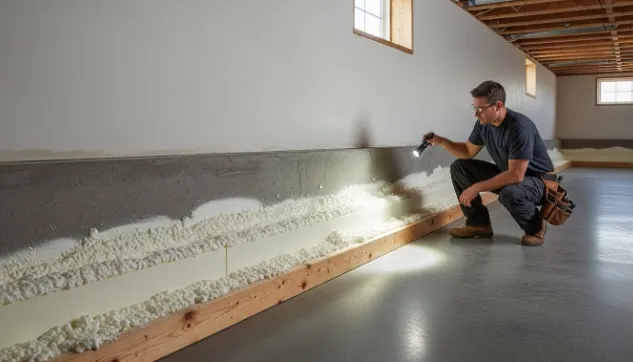
The rim joist is the band of wood that runs along the top of your home's foundation wall, connecting the floor framing to the structure above. It is one of the most consistent sources of cold air infiltration in Chicago-area homes — exposed to outdoor temperatures on one side and the conditioned living space on the other, with little to nothing between them in many older properties. Combined with uninsulated or poorly insulated basement walls, this area of the home is responsible for a significant portion of the heat loss that drives heating costs up through Illinois winters. Most homeowners never think to look here because it is out of sight — but it shows up clearly on every energy bill from November through March.
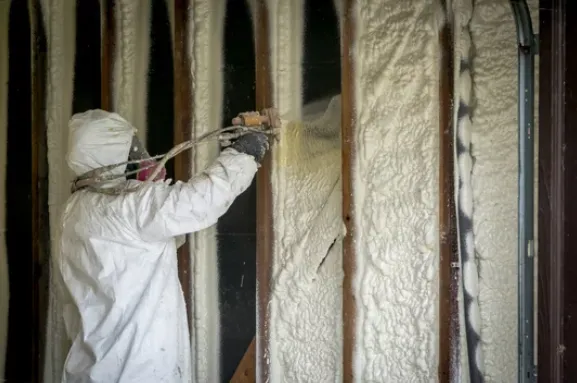
Basement and rim joist insulation involves selecting the right material for a below-grade environment where moisture, temperature swings, and air pressure all interact in ways that degrade standard insulation over time. Closed cell spray foam is the most effective solution for rim joists — it fills the irregular cavity completely, adheres directly to the wood framing, and creates its own air and vapor barrier in a single application. For basement walls, the right approach depends on whether the space is conditioned or unconditioned, finished or unfinished, and what moisture conditions exist. We assess all of these factors before recommending a material or method.
Homes across Des Plaines, Schaumburg, Joliet, Bolingbrook, and the wider Chicago metro that have had basement and rim joist insulation installed properly report consistent improvements in floor temperature on the level above, lower heating costs through winter, and reduced cold air infiltration throughout the lower level. It is one of the most impactful insulation improvements available for older Chicago-area homes, and one of the most commonly overlooked. Contact OTS Chicago Insulation for a free assessment and find out exactly what your basement and rim joist area needs.
What We Offer:
Rim Joist Spray Foam Insulation — Closed cell spray foam applied directly to rim joist cavities fills every gap, adheres to the wood framing, and creates an air and vapor barrier that stops cold air infiltration at one of the most common entry points in Chicago-area homes. This is the most effective and durable solution for rim joist insulation in this climate.
Basement Wall Insulation — We insulate basement walls with materials appropriate for below-grade conditions — closed cell spray foam, rigid foam board, or a combination depending on the wall assembly, moisture conditions, and whether the space is intended to be conditioned or left unconditioned. Material selection is always based on what the specific environment requires.
Rim Joist Air Sealing — Before insulation is applied, all gaps, cracks, and penetrations around the rim joist area are sealed to eliminate air pathways that insulation material alone cannot fully address. Air sealing and insulation together produce significantly better results than either one applied without the other.
Basement Rim Joist Assessment — We inspect the rim joist and basement wall conditions before recommending any materials or scope of work. This includes checking for existing insulation, moisture damage, air infiltration points, and structural conditions that affect which approach will perform best in your specific home.
Below-Grade Moisture Management — Basement walls in contact with soil are subject to moisture intrusion that affects both the insulation and the structural components behind it. We select materials and application methods that manage moisture in below-grade environments rather than absorbing it and holding it against the wall over time.
Unfinished Basement Insulation — Unfinished basements with exposed walls and floor framing are straightforward to insulate and represent a clear opportunity to improve whole-home thermal performance. We assess the space and install the right insulation for the conditions so the improvement holds up without requiring ongoing maintenance.
Finished Basement Insulation Access — Finished basements present more limited access to rim joist and wall cavities. We assess what is accessible and address the insulation gaps that can be reached without requiring full demolition of finished surfaces where that can be avoided.
Why Choose OTS Chicago Insulation for Basement & Rim Joist Insulation
Right Material for Below-Grade Conditions — Standard insulation materials do not perform reliably in basement and rim joist environments where moisture and temperature swings are consistent factors. We select materials — primarily closed cell spray foam and rigid foam — that are appropriate for these conditions and maintain their performance over time.
Air Sealing and Insulation Together — Rim joist insulation delivers its full value only when the air leakage pathways around it are also sealed. We address both in the same project so the finished installation performs at the level it is rated for rather than allowing air to bypass the insulation through unsealed gaps.
Assessment Drives Every Recommendation — Basement and rim joist conditions vary significantly between homes depending on age, construction type, moisture history, and foundation material. We assess your specific situation before recommending any scope of work so the recommendation is based on what your home actually needs.
Chicago Foundation and Climate Knowledge — Foundations across Des Plaines, Schaumburg, Joliet, and the Chicago metro deal with specific frost depth, soil moisture, and temperature conditions that affect how basement insulation performs over time. We bring that regional knowledge to every assessment and installation we complete in this area.
One Team, Full Accountability — The crew that assesses your basement and rim joist installs the insulation. There are no subcontractors involved and no gap between what was identified during the assessment and what actually gets addressed during installation. The job is finished when every identified problem area has been properly resolved.
DISCOVER WHAT OUR CUSTOMERS HAVE TO SAY ABOUT US
REVIEWS
Review us on Google
⭐⭐⭐⭐⭐
High energy bills? Drafty rooms? Cold floors that never warm up?
Get a Free Estimate and Find Out Exactly What Your Home Needs to Perform Better This Winter



Insulate Better. Live Smarter. Save More.
Contact Us
Social

Quick Links
Services
Locations
